Westcombe Park wedding flowers case study Mycenae House
Posted on 02/10/2026
If you are looking into a Westcombe Park wedding flowers case study Mycenae House, chances are you want more than pretty pictures. You want to know what actually works in the room, how the flowers hold up through the day, and what choices feel right for a venue like Mycenae House in Westcombe Park. Fair enough. Weddings move fast, and flowers have to do a lot of quiet heavy lifting while looking effortless.
In this guide, we break down the planning thinking behind wedding flowers for Mycenae House, with a focus on practical design choices, venue-fit decisions, and the small details that make the whole setup feel polished rather than overdone. You will find advice on bouquet styles, ceremony and reception flowers, timing, mistakes to avoid, and a realistic example of how a cohesive wedding flower plan can come together without turning into a stress spiral. Because let's face it, nobody wants to be negotiating centrepieces at 8:30 on the morning of the wedding.
Table of Contents
- Why this case study matters
- How the flower planning process works
- Key benefits and practical advantages
- Who this is for and when it makes sense
- Step-by-step guidance
- Expert tips for better results
- Common mistakes to avoid
- Tools, resources and recommendations
- Law, compliance, standards, or best practice
- Options, methods, or comparison table
- Case study or real-world example
- Practical checklist
- Conclusion
- Frequently asked questions
Why Westcombe Park wedding flowers case study Mycenae House Matters
A wedding flower case study is useful because it turns vague inspiration into real decision-making. It shows how floral design changes when it meets an actual venue, an actual timeline, and actual people carrying boxes, buttonholes, and bouquets across the day. Mycenae House is not a blank canvas. Like any well-used London wedding venue, it has its own scale, light, entrances, and room flow. That means the best flowers are not necessarily the biggest or the trendiest. They are the ones that suit the space.
Westcombe Park is also a setting where style tends to matter in a subtle way. Couples often want something elegant and personal, but not showy for the sake of it. The flowers need to feel in tune with the building and the day's atmosphere. Think natural, well-shaped, and intentional rather than overbuilt. You can absolutely create drama if you want it, but the trick is to let the venue do some of the work.
This is where a case study becomes valuable. It helps you answer questions like:
- How much floral impact does the room really need?
- Should the bouquet be romantic and loose, or structured and classic?
- What flowers photograph well in indoor light?
- How do you keep the design consistent across ceremony, reception, and portraits?
Those questions matter because wedding flowers are not just decoration. They shape the first impression, the colour story, and the mood in the room. If the plan is too busy, the venue can feel crowded. If it is too minimal, the space can feel underdressed. The sweet spot is usually somewhere in the middle, and that middle is easier to find when you look at a real venue-specific example.
Expert takeaway: the best Mycenae House wedding flowers are usually the ones that respect the room first and the trend second. That sounds simple, but it saves a lot of awkward decisions.
How Westcombe Park wedding flowers case study Mycenae House Works
The planning process usually starts with three things: venue layout, wedding style, and practical budget. Once those are clear, the floral design can take shape. For a venue like Mycenae House, the approach is often about balancing visibility with restraint. You want the flowers to be noticed, but not so large that they fight with the architecture or the guest tables.
In practical terms, a florist would typically look at the following:
- Ceremony flowers: bouquets, pedestals, aisle touches, or focal arrangements.
- Bridal flowers: bridal bouquet, bridesmaid bouquets, buttonholes, corsages, and possibly hair flowers.
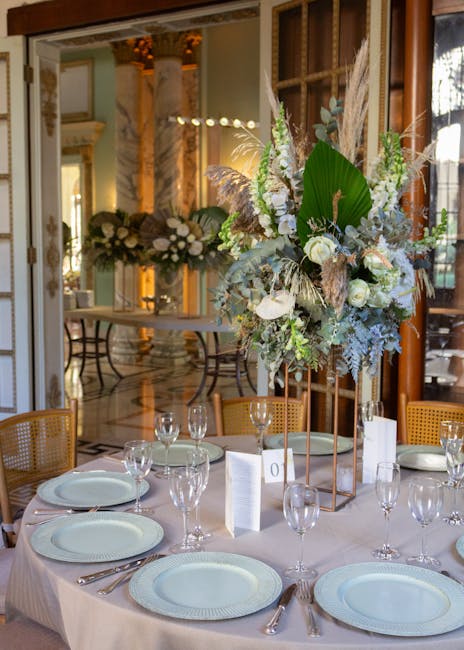
- Reception flowers: table arrangements, low bowls, garlands, or mixed centrepieces.
- Finish and flow: how the colours repeat from one part of the day to the next.
The key is continuity. If the bridal bouquet is airy and romantic, the table flowers should not suddenly become rigid and formal. If the ceremony flowers are full of texture, the reception styling should echo that texture somewhere else. This doesn't mean every arrangement has to be identical. In fact, that can look a bit flat. It means there should be a clear family resemblance.
For couples planning in Westcombe Park, same-day logistics matter too. Flower delivery timing, storage, setup, and handover all need to be thought through. You don't want blooms sitting too long in a warm room, and you definitely don't want last-minute confusion about where the bouquets are meant to go. Small thing? Not really. Those little details are what keep the day calm.
If you are browsing options for bridal flowers and matching pieces, it helps to look at curated wedding ranges such as wedding flower collections, plus individual items like bridal bouquets, bridesmaid bouquets, and buttonholes.
Key Benefits and Practical Advantages
The real value of a strong wedding flower plan is not just visual beauty. It is control, cohesion, and confidence. That may sound slightly boring on paper, but on the day itself it feels brilliant.
Here are the main advantages of getting a venue-aware floral plan right:
- Better visual balance: flowers fit the room instead of swallowing it.
- Stronger photographs: bouquets and table arrangements work with the light and backdrop.
- Less stress: everyone knows what arrives where and when.
- Clearer spending: the budget goes to the areas that will actually be seen.
- More personality: the flowers reflect the couple, not just the trend of the month.
There is also a practical advantage many couples overlook: flowers can help organise the visual flow of the day. A bouquet can tie in with the bridesmaid dresses. Buttonholes can quietly echo the ceremony palette. Reception flowers can warm up a room that feels a little stark before guests arrive. That kind of detail is subtle, but very effective.
Another benefit is flexibility. A well-planned wedding flower scheme can be scaled up or down. If your venue is already rich in character, you may only need a few focal pieces and some elegant handheld flowers. If the room is more neutral, you can add more texture, height, or colour. The design should serve the room, not fight it.
For couples wanting a softer or more refined look, popular wedding categories like white wedding collections, classic wedding collections, and romantic wedding collections can be a good starting point. If you want something bolder, mixed colour designs and rose-led arrangements can bring more energy without looking chaotic.
Who This Is For and When It Makes Sense
This kind of wedding flower planning makes sense for couples who want their flowers to feel tailored rather than generic. It is especially useful if you are marrying at a venue like Mycenae House and want the flowers to work with the space, not just with your Pinterest board.
It is a good fit if you are:
- planning a local London wedding and want floral delivery to be straightforward
- trying to keep the styling elegant without overspending on one oversized feature
- needing flowers that look good in photos from both close-up and across the room
- choosing a colour palette and want it repeated consistently across the day
- balancing personal taste with a venue that already has a strong character
It also makes sense if you are a practical planner. Some couples love flowers but don't want to spend months obsessing over petals and stems. Quite understandable. In that case, the smart move is to define the mood early-soft and romantic, fresh and modern, or structured and classic-and then keep the rest simple.
Not every wedding needs a huge floral statement. Sometimes a bridal bouquet, a few buttonholes, a top table arrangement, and a handful of table pieces are enough. Other times the venue benefits from more layered styling. The right answer depends on guest count, room size, and how much of the venue is already visually strong. That's why a venue-specific approach matters so much.
Step-by-Step Guidance
If you are wondering how to build a flower plan that feels polished and not overcomplicated, this is the sequence I'd use. Nothing fancy. Just a sensible process.
1. Start with the venue and the rooms you will actually use
Walk through the ceremony area, entrance, dining space, and any spots where guests will gather for a drink or photo. Where will flowers be seen first? Where will they sit quietly in the background? That distinction matters. A display near the entrance should carry more visual weight than a small table arrangement tucked near the wall.
2. Decide the mood before the flowers
Choose a mood word or two: airy, romantic, modern, refined, garden-like, timeless, or bold. Then let that guide flower selection. A lot of people do this backwards and end up with arrangements that are technically lovely but emotionally slightly off. It happens. More often than you'd think.
3. Fix the core floral pieces
Usually that means the bridal bouquet, bridesmaid bouquets, buttonholes, and any statement arrangements for the ceremony. These are the anchor items. Once they are set, everything else can be designed to support them.
4. Match the scale to the venue
If the room is compact, a huge installation may dominate. If the room is spacious or high-ceilinged, tiny arrangements can disappear. This is where a florist's judgment really helps. Scale is one of those things people only notice when it is wrong. Then suddenly it is very obvious.
5. Build a delivery and setup plan
Ask how the flowers will arrive, who will place them, and whether anything needs to be moved between ceremony and reception. If the same flowers need to do double duty, plan that early. Reusing ceremony arrangements can be smart, but only if the mechanics are sorted in advance.
6. Add the final details
This is where ribbons, vase choices, and colour repetition matter. Those little finishing details can make an ordinary design feel complete. A bouquet with the right ribbon can suddenly feel intentional. A table arrangement with the right vessel can stop looking like "just flowers" and start looking like part of the room.
7. Confirm timing the week before
Wedding timing changes, and flowers hate uncertainty more than most things. Confirm the delivery window, venue access, and contact person. Simple, but essential.
Expert Tips for Better Results
After enough wedding flower planning, certain truths keep showing up. Nothing dramatic. Just the sort of things that save hassle and improve the result.
- Choose one hero element. Let the bouquet, ceremony display, or table flowers do the heavy lifting, not all three at once.
- Keep the palette tight. Too many competing colours can make the styling feel restless.
- Use texture as well as colour. Different bloom shapes make arrangements feel richer, even in a limited palette.
- Think about sightlines. Guests should be able to talk across a table without staring through a hedge of flowers.
- Plan for temperature and timing. Some flowers last better than others if the room is warm or the day runs long.
- Test how the bouquet feels in the hand. Beautiful is good. Comfortable is better.
One of the best tricks, honestly, is to view the flowers from the angle your guests will see them. Not from above. Not from a florist's bench. From the seat. That is where the truth lives.
If you are choosing flowers for a classic wedding palette, a combination of roses, lisianthus, orchids, and softer mixed blooms can give you a refined finish. For something a little fresher and looser, seasonal-style arrangements with lighter stems and softer movement can feel more relaxed. There's no universal winner. It depends on the room and the tone you want.
For those who like to coordinate across the whole day, it can help to think beyond the bouquet and into the full floral suite: wedding table arrangements, corsages, and even a matching wedding gift selection for the couple or wedding party.
Common Mistakes to Avoid
It's easy to get swept up in images and forget the practical side. Wedding flowers are emotional purchases, yes, but they are also working parts of the day. Here are the mistakes that show up most often.
- Over-ordering for the space. Big is not automatically better.
- Ignoring the venue's style. A flower scheme should complement the room rather than compete with it.
- Choosing flowers in isolation. A bouquet that looks stunning on its own may not fit the rest of the plan.
- Leaving delivery details vague. "We'll sort it on the day" is not a strategy. It really isn't.
- Forgetting who will move arrangements. If flowers need to go from ceremony to reception, someone needs to handle that transition.
- Picking blooms without checking the season. Availability can affect price, freshness, and look.
A subtle mistake is making every arrangement equally important. That sounds balanced, but it often creates visual noise. Better to identify the priority pieces and let the rest support them. A room with one beautiful focal point and several quieter arrangements usually feels more elegant than a room where every item is shouting.
Another one: forgetting about buttonholes and corsages until the last minute. These may be small, but they tie the party together. When they are missing or mismatched, you notice. Not because guests are checking, but because the styling suddenly feels incomplete.
Tools, Resources and Recommendations
You do not need a dozen tools to plan wedding flowers well. A few sensible resources are enough.
- Venue photos: use the actual ceremony and reception space, not just inspiration pictures.
- Colour swatches: even simple fabric samples help when choosing blooms and ribbons.
- A guest list estimate: useful for counting tables, buttonholes, and family flowers.
- A notes app or shared document: keep track of changes, times, and special requests.
- Delivery confirmation: always useful when multiple suppliers are involved.
On the product side, some couples like to build from the bouquet outward, while others begin with a table design and work backwards. Both approaches can work. If you need a coordinated look, it helps to browse bouquets and arrangements together rather than in separate little silos. For example, wedding collections and category pages such as bridal bouquets, bridesmaid bouquets, buttonholes, and table arrangements can help you compare style families quickly.
For broader support, useful site pages include flower care, delivery information, guarantees, and contact details. Those pages are worth checking if you want clarity on how orders are handled and how flowers are looked after after arrival.
Law, Compliance, Standards, or Best Practice
For wedding flowers, the main issues are usually practical best practice rather than heavy regulation. Still, a professional approach matters. You want clear ordering terms, sensible delivery arrangements, transparent substitution policies, and responsible handling of customer data. In the UK, that means a business should be clear about payment, privacy, delivery, and returns expectations, even if the exact terms vary from one florist to another.
Good wedding floristry also follows industry norms around freshness, transport, and setup. For example:
- flowers should be stored and transported in a way that protects them from heat and damage
- event timing should be confirmed in advance so bouquets and arrangements arrive in usable condition
- substitution policies should be understood before the order is placed, especially for seasonal blooms
- venue access rules should be respected, including setup windows and loading arrangements
It is also wise to check refund and replacement terms if a wedding order changes. Weddings are live events, and real life sometimes gets in the way-guest counts shift, timings move, and plans evolve. A clear supplier policy helps avoid awkwardness later.
If sustainability matters to you, ask about packaging choices, waste reduction, and sourcing philosophy. Many couples in London do care about that, and fairly so. Even a simple decision like reusing vessels or choosing a lower-waste design can make the flowers feel more thoughtful.
For official order and policy details, you may also want to review terms and conditions, privacy policy, returns and refunds, and sustainability information.
Options, Methods, or Comparison Table
When planning wedding flowers for Mycenae House, the decision is often less about "what looks nice" and more about which method suits the venue, the budget, and the schedule. Here is a practical comparison.
| Approach | Best for | Pros | Watch-outs |
|---|---|---|---|
| Bridal-led floral plan | Smaller weddings or tighter budgets | Simple, elegant, easy to coordinate | Reception may feel underdressed if no supporting pieces are added |
| Full venue styling | Couples wanting a strong visual effect | Creates consistency across ceremony and reception | Can become expensive or overly busy if not edited well |
| Flower-light, detail-rich plan | Venues with strong character | Lets the room breathe, often looks refined | Needs careful colour and placement choices to avoid looking sparse |
| Reused ceremony arrangements | Practical planners who want value | More efficient use of flowers and budget | Requires a clear move plan and someone to handle the changeover |
There is no perfect method. The best option depends on the room and on what matters most to you. If you want atmosphere, go for focal pieces and layered table flowers. If you want ease, keep the plan focused and let a few well-chosen pieces carry the day. To be fair, most couples end up somewhere in between.
Case Study or Real-World Example
Here is a realistic example of how a Westcombe Park wedding flowers plan for Mycenae House might come together.
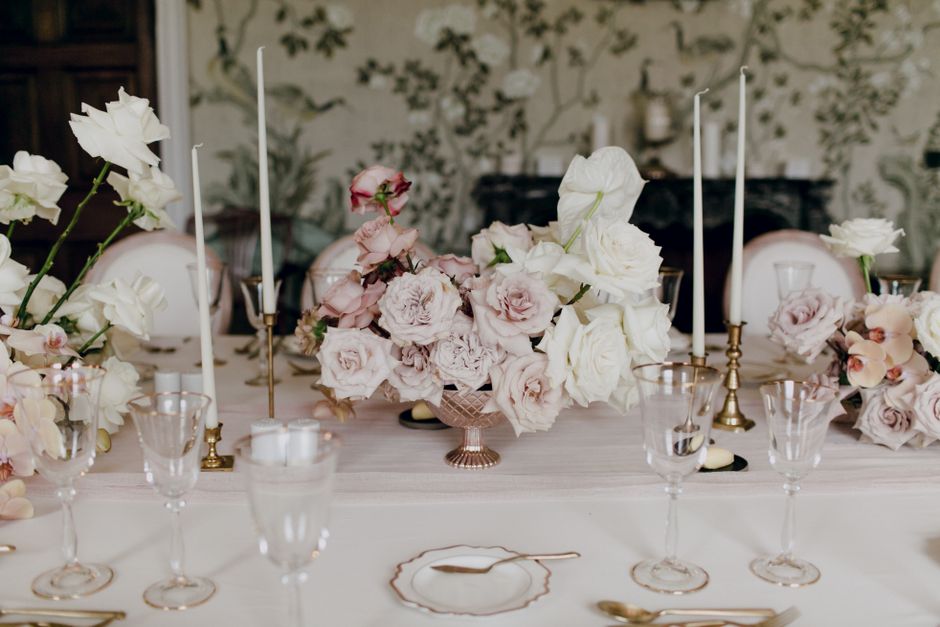
A couple wants a soft, romantic look with white, blush, and a hint of green. They are not trying to create a grand floral installation; they want something tasteful, fresh, and photogenic. The ceremony is indoors, followed by drinks and a seated reception. The room has character, so the flowers need to enhance it without cluttering it.
The plan might look like this:
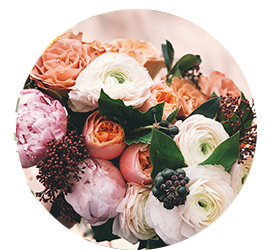
- a bridal bouquet with roses, lisianthus, and a little airy foliage
- two bridesmaid bouquets kept slightly smaller, but clearly related
- groom and groomsmen buttonholes using a simple rose-led design
- one statement arrangement near the ceremony focal point
- low table arrangements that allow conversation and candlelight to work properly
- a few matching pieces for the top table or signing table
What makes this effective is not the size of the flowers. It is the repetition of shape and colour. The bouquet and table pieces feel like they belong to the same family. Guests may not consciously analyse it, but they feel it. The room reads as calm, considered, and complete.
Here's the bit people often underestimate: the flowers only need to be "loud" in the right moments. The bride walks in. The couple signs. The first photos are taken. After that, the best flowers become part of the atmosphere rather than the main event. That is often exactly what you want.
For couples who prefer more direct style cues, a wedding collection such as True Happiness or The Perfect Match can give a quick sense of how a coordinated set of bridal, bridesmaid, and table flowers might work together.
Practical Checklist
Use this checklist to keep the flower planning grounded. It is not glamorous, but it works.
- Confirm the wedding date and venue early
- Decide the mood: romantic, classic, modern, soft, bold, or natural
- Choose a colour palette and keep it reasonably tight
- Identify the key items: bouquet, buttonholes, ceremony flowers, table flowers
- Check how flowers will travel, arrive, and be stored
- Ask whether any arrangements need to be moved during the day
- Review the venue's access times and setup rules
- Think about photographs and where flowers will be most visible
- Confirm the final order and any substitutions before the wedding
- Make sure someone knows who signs for delivery and where items go
If you tick off only one thing, make it delivery timing. That one tiny detail can save a lot of last-minute noise.
Expert summary: the most successful Mycenae House wedding flower plans are simple to explain, carefully timed, and visually consistent from the first bouquet to the last table arrangement. That's the sweet spot.
Conclusion
A strong Westcombe Park wedding flowers case study Mycenae House is really about understanding venue, timing, and mood. Once those three are in place, everything else gets easier. The flowers stop being a loose collection of nice things and become part of the day's structure, which is exactly what they should do.
If you are planning a wedding at Mycenae House, the best next step is to narrow your style, decide where the flowers need to do the most work, and build from there. Keep the plan elegant, practical, and true to the room. You do not need every trend under the sun. You need the right flowers in the right places.
And honestly, that usually looks better anyway.
Get a free quote today and see how much you can save.
Frequently Asked Questions
What makes Mycenae House a different kind of wedding flower venue?
Its character and room layout mean flowers need to complement the space rather than overwhelm it. A good design usually focuses on balance, scale, and flow.
How many flower arrangements do I need for a Mycenae House wedding?
That depends on guest count, room size, and how much impact you want. Many weddings can work well with a bridal bouquet, bridesmaid bouquets, buttonholes, and a few ceremony or table pieces.
What flowers work best for a Westcombe Park wedding?
Roses, lisianthus, orchids, alstroemeria, and mixed seasonal blooms are all flexible options. The best choice depends on your palette and the look you want.
Can wedding flowers be reused from the ceremony to the reception?
Yes, often they can. Ceremony arrangements can sometimes be moved and repurposed for the reception, but the handover plan needs to be clear from the start.
How far in advance should I book wedding flowers?
As early as you can, especially for popular dates. Booking early gives you more choice and leaves room to refine the design without rushing.
Are white wedding flowers a safe choice for Mycenae House?
Yes, white is often a strong choice because it feels timeless and works well in many venue styles. Adding soft greenery or blush can stop it from feeling too stark.
What is the most important bouquet decision?
Comfort and proportion matter a lot. A bouquet should suit the dress, the person carrying it, and the overall style of the wedding.
How do I avoid wedding flowers looking too crowded?
Use fewer, better-placed arrangements and keep the palette controlled. Not every surface needs flowers, and leaving space can make the design feel more elegant.
Do buttonholes and corsages really matter?
They do, because they help the whole wedding party feel visually connected. Even small pieces contribute to the overall finish.
What should I check before the flowers are delivered?
Confirm the address, delivery window, venue contact, and where each item should go. If anything is being moved later in the day, make sure that is agreed too.
Can I keep the flower plan simple and still make it feel special?
Absolutely. A simple plan with a beautiful bouquet, coordinated buttonholes, and a few well-chosen arrangements can feel more refined than an overcomplicated design.
What is the biggest mistake couples make with wedding flowers?
They often choose individual pieces they love without checking how those pieces work together. The best results come from designing the whole flow, not just one arrangement at a time.
Where can I find matching wedding flower options and information?
Start with wedding collections and product pages, then check practical pages like delivery, flower care, guarantees, and contact information so you know how everything will be handled.